
An in-depth analysis of how a strong, balanced housing market can help stabilize jobs, rebuild confidence, and drive recovery during economic slowdowns.
Canada’s real estate sector isn’t just about homes — it’s a core economic engine. From construction sites to legal offices, from banks to hardware stores, housing transactions stimulate thousands of interconnected businesses. When the market slows, the impact ripples through employment, spending, and public finances.
But here’s the other side of the story: real estate can also help fight recession. With the right balance — not runaway prices, but healthy, sustainable activity — housing can fuel recovery, create jobs, and restore consumer confidence when it’s needed most.
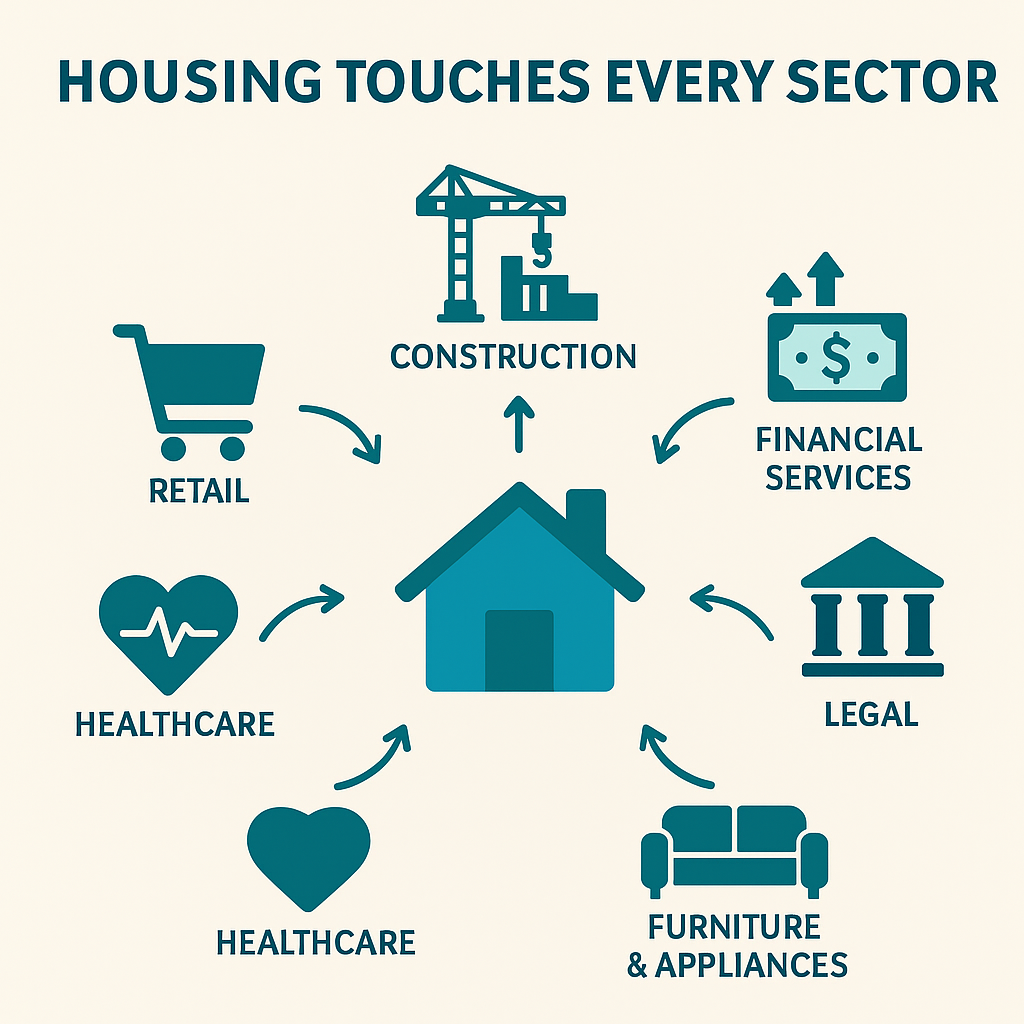
Infographic: How housing transactions activate multiple sectors of the economy.
1. The Housing Multiplier: One Sale = Many Jobs
Each real estate transaction triggers a chain reaction:
- Mortgage and legal services activate professional sectors.
- Renovations and repairs boost trades and retail supply chains.
- Furniture, appliances, landscaping, and moving services benefit immediately after closing.
- New-build projects generate months or years of steady employment.
This multiplier effect means every healthy uptick in housing activity directly stimulates GDP — often faster than large infrastructure projects, because the private sector drives it.
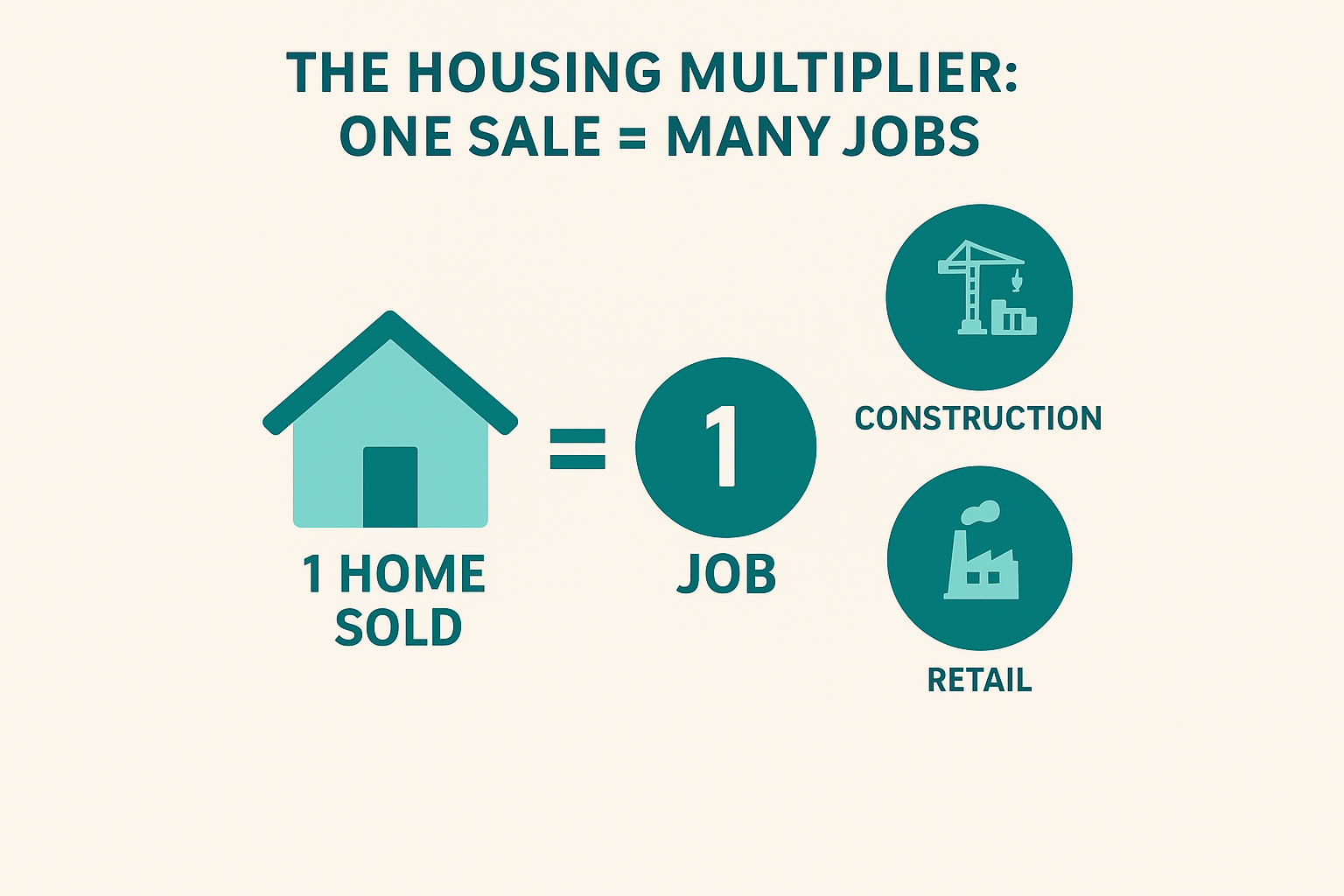
Illustration: How each housing segment contributes to Canada’s GDP during recovery cycles.
2. Confidence Creates Spending, Spending Fuels Growth
When people feel their largest asset — their home — is stable or gaining value, they’re more likely to spend, invest, and plan ahead. That sentiment boost matters:
- Retail and travel see increased discretionary spending.
- Small businesses benefit from household investments.
- Borrowing confidence helps responsible expansion and renovation.
Recessions feed on fear; housing helps reverse it by reinforcing financial security across households.
3. Steady Revenue Streams for Public Investment
Property transactions fund land-transfer taxes, development fees, and property tax growth — vital streams for municipal and provincial budgets. As these stabilize, governments regain the capacity to fund infrastructure, healthcare, and education — all key to sustaining recovery momentum.
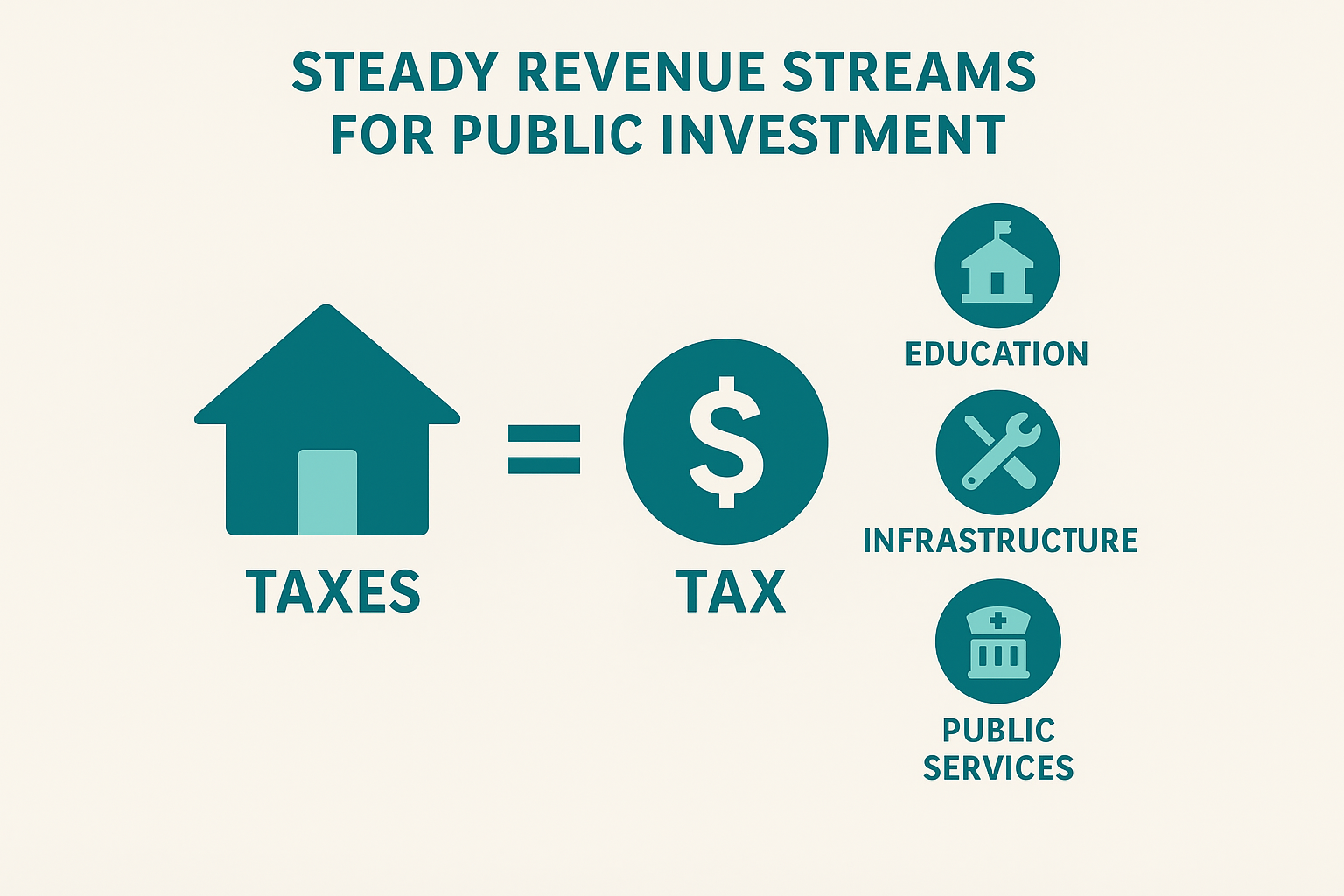
Cycle: Housing activity → job growth → consumer confidence → fiscal strength → further stability.
4. How Canada Can Harness Real Estate for Recovery
- Encourage sustainable building: Incentives for mid-market, energy-efficient housing add supply while supporting trades.
- Speed up approvals: Faster permits mean quicker job creation and tax generation without inflating demand artificially.
- Support first-time buyers responsibly: Balanced entry programs keep transactions flowing, creating ripple effects without overheating prices.
- Promote smart renovations: Targeted credits for green or accessibility upgrades stimulate contractors and modernize housing stock.
Conclusion: Housing as a Recovery Engine
Real estate isn’t the only tool Canada needs to combat recession — but it’s one of the fastest and most direct. By stimulating jobs, restoring confidence, and supporting public revenue, a balanced housing market offers a built-in economic accelerator. Managed wisely, it helps communities weather downturns and emerge stronger.
Looking for data-driven guidance on buying, selling, or investing during this market cycle?
Let’s Talk Strategy